

For years, awarding grants meant dealing with a mountain of paperwork: 40-page applications, messy spreadsheets, and endless private email chains. But as we head into 2027, foundation operations have hit a turning point, all thanks to modern technology.
Smaller, lean teams are finally leaving complicated legacy systems behind in favor of fast, human-centered technology. Today's grantmakers know that grantmaking tools should make your mission easier, not create more red tape.
To help you understand the current landscape, we’ll explore some of the latest grants management software trends affecting philanthropy. Here’s what to expect:
Ready to learn how modern software is helping grantmakers award funds faster and make trust-based philanthropy a breeze? Let’s get started.

The primary grants management software trends and broader grants management trends for 2027 are all about ditching rigid enterprise software for flexible, easy-to-use cloud platforms. Modern grantmakers are putting trust-based philanthropy into action through grantee portals. They are also using ethical AI to help summarize applications, and connecting their CRM directly with Candid and their accounting software to cut down on administrative headaches.
Here’s a quick rundown of what foundations are doing to modernize grantmaking operations with technology:
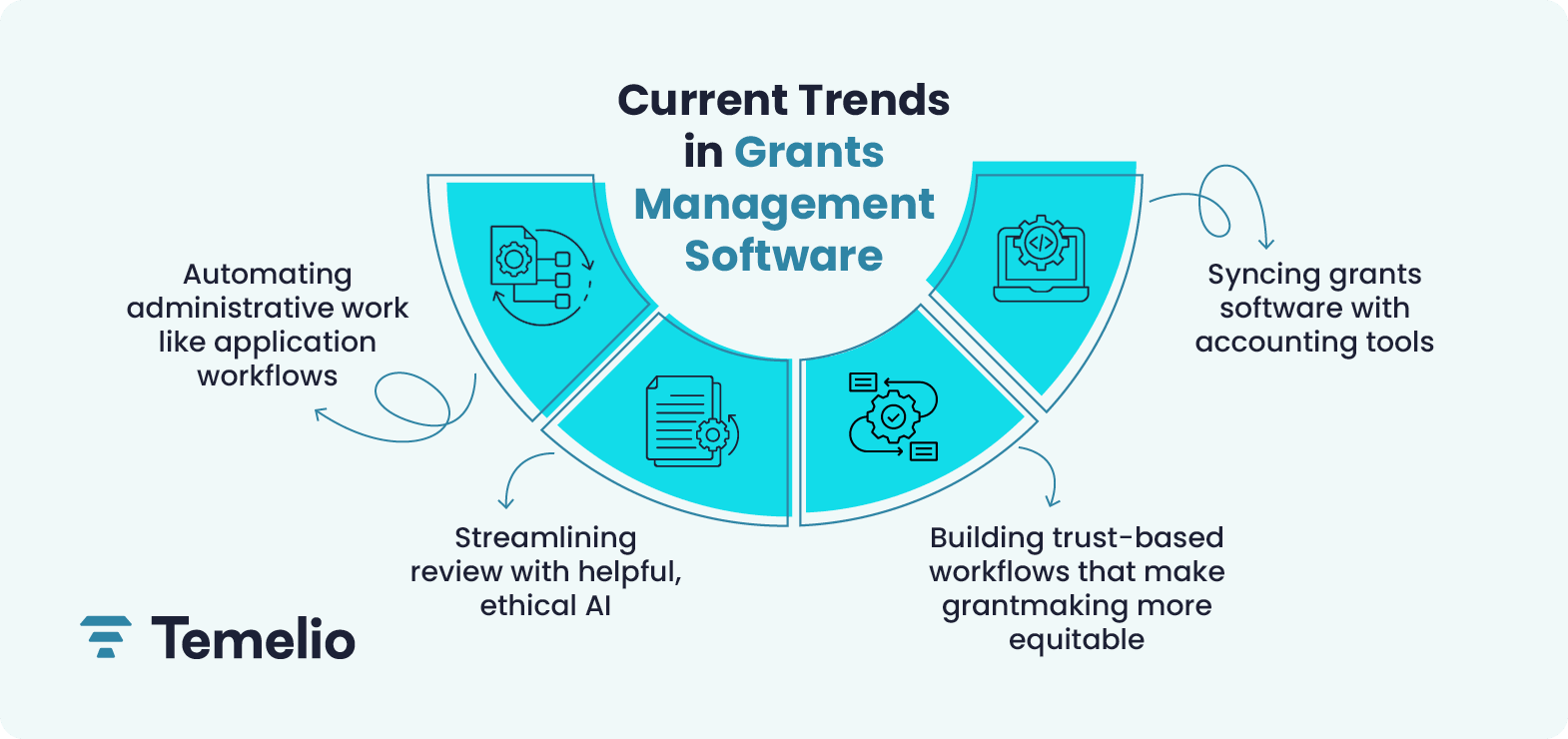
Today, the best grants management tools are the ones that simply get out of the way. By letting the software handle the heavy lifting, your foundation can stop fighting with spreadsheets and get back to funding the work that matters.
When evaluating software, foundations are saying goodbye to clunky, older enterprise systems in favor of nimble, cloud-native software. Because traditional software often requires pricey consultants or IT experts just to make a simple update, modern teams are moving to platforms they can adjust themselves. This empowers your staff to tweak application forms and update review workflows entirely on their own.
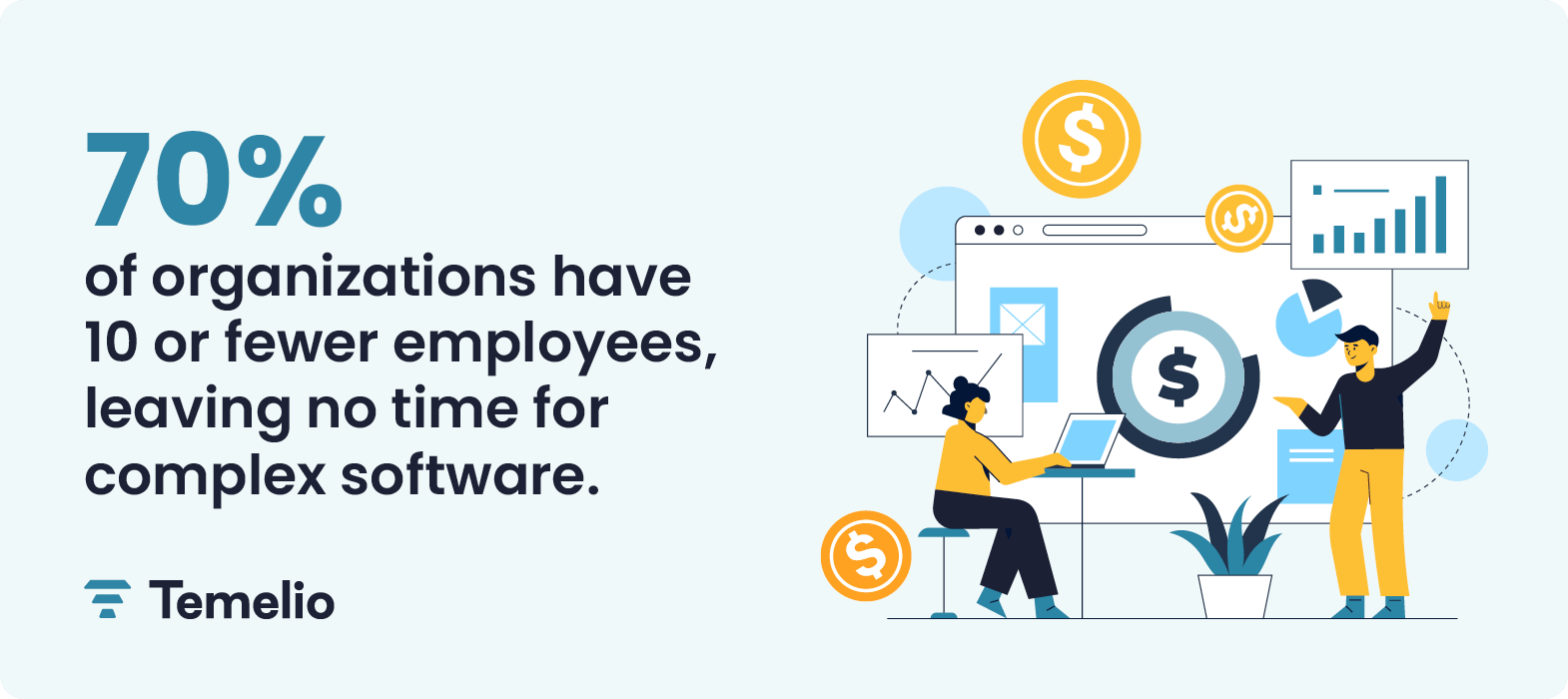
The urgency driving this grants management trend stems from common operational roadblocks:
So, what features are driving foundations to make the switch to configurable cloud-based platforms like Temelio? When evaluating new systems, program teams are looking for tools that give them total operational control without technical headaches, such as:
By putting non-technical program teams in total control, modern grantmakers can make operational updates in minutes and keep their funding moving forward.
One of the most impactful grants management trends is using grantee-focused software to turn trust-based philanthropy into a reality. Instead of asking nonprofits to fill out exhausting 40-page applications, modern platforms offer simple forms, auto-filled profiles, and two-way messaging. This helps your foundation show genuine respect for your nonprofit partners' time and resources.
Modern grantee portals operationalize trust-based grantmaking with specific features built to reduce administrative friction, such as:
For an example of this in action, see the screenshot below, showing how foundations can leave comments for applicants within Temelio:
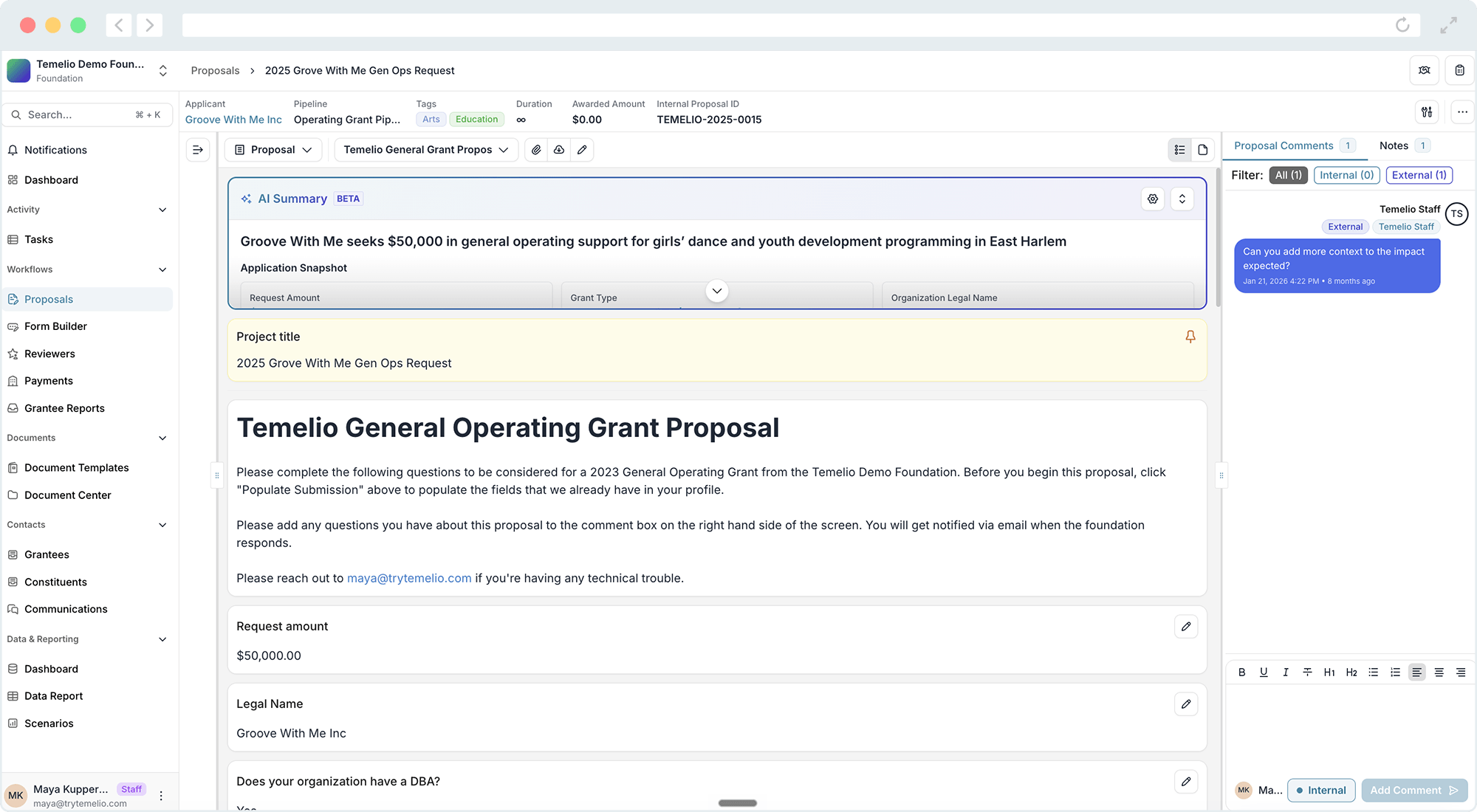
By putting these self-service tools in the hands of applicants, foundations are lowering the barrier to entry for funding and building stronger relationships with their community partners.
As grants management software trends evolve, foundations are finding helpful, ethical ways to use artificial intelligence (AI). Instead of making funding decisions, AI is being used to summarize long proposals, pull numbers from budgets, and highlight key metrics. This gives review committees clear, objective summaries so they can spend their energy on what really matters: building relationships, ensuring mission alignment, and evaluating community impact.
To implement AI responsibly while keeping up with the latest trends, grantmakers are setting clear rules to ensure actual evaluation is left completely up to human program officers. This keeps final funding decisions rooted in personal relationships and community context.
In 2024, foundations reported using AI for meeting notes and/or transcriptions as well as drafting reports, emails, and memos (TAG 2024). However, AI capabilities within grants intelligence systems have come a long way since then. Today, foundations are looking for grants management technology that offers these AI tools:
Bonus: Learn more about balancing technology and human insight with our blog post about AI in grants management.
Lately, foundations are seeking software that acts as their central nervous system, rather than relying on disparate tools. Instead of jumping between disconnected spreadsheets, email threads, and accounting systems, grantmakers are unifying their relationship tracking, compliance checks, and financial records into a single workspace.
By bringing these tools under one roof, a modern grants management system seamlessly manages the entire grant lifecycle:
By leveraging a unified platform, foundations can eliminate redundant data entry and manage the entire grantmaking pipeline with total visibility. Think of it this way: unifying your operations means less time acting as software administrators and more time driving community impact.

AI is being used to handle routine reading and administrative tasks rather than to evaluate candidates. Examples include summarizing long proposals, pulling financial metrics, running due diligence analyses, and translating applications into applicants’ native languages. Foundations are leaving actual evaluation and award decisions entirely in the hands of human program officers.
Trust-based technology simplifies application and reporting workflows to show genuine respect for a nonprofit’s time and resources. Grantee portals achieve this through auto-filled organization profiles, multi-user collaboration, integrated messaging, and flexible reporting options like uploading existing documents or video updates. By eliminating repetitive data entry and long forms, software helps nonprofits spend less time on paperwork and more time on their core mission.
Modern grant intelligence systems integrate with accounting tools (such as Sage Intacct and QuickBooks) via bi-directional syncs that automate disbursement approvals, payment reconciliation, and audit reporting. Rather than requiring a disconnected third-party tool, platforms like Temelio embed native CRM functionality into the grant workflow to centralize grantee records and communications. For foundations with enterprise-wide needs, REST APIs and webhooks can also mirror this grant and stakeholder data into external CRMs like Salesforce.
Lean foundation teams are leaving traditional software behind because older platforms often require expensive consultants or internal IT staff just to make simple updates. Cloud-native platforms like Temelio offer intuitive, no-code form editors and drag-and-drop workflow builders that program staff can adjust entirely on their own. This eliminates technical bottlenecks and gives small teams more operational agility.
As philanthropy moves into 2027, the underlying message behind these grants management software trends is clear: modern technology should eliminate administrative friction, not create it. By leaving clunky legacy software behind, foundation teams can reclaim lost hours, strengthen relationships with community partners, and make trust-based grantmaking an everyday reality.
Don't let outdated systems slow down your foundation's impact. Built specifically for lean teams, Temelio delivers on these top trends. Schedule a demo to see how our platform can help your team award funds faster and focus on what matters most: driving meaningful change.
In the meantime, explore these guides to continue modernizing your foundation's operations:


Working with you globally from NYC
14 Wall St, 18C New York, NY 10005