

As a funder, you have the fortunate and daunting responsibility of choosing where to direct grant dollars among a sea of worthy causes and organizations. The grant application your team builds is what allows you to gather the information you need to fund the projects that will make the greatest impact. It also serves as many nonprofits’ first contact with your foundation.
In this guide, we’ll explore how to write a grant application that works for applicants and your team. We’ll cover:
As you explore these tips, remember that intuitive grants intelligence software like Temelio is your key to creating effective applications. Backed by effective tools, you can deliver a positive grantee experience and capture the information you need to make smart funding decisions.
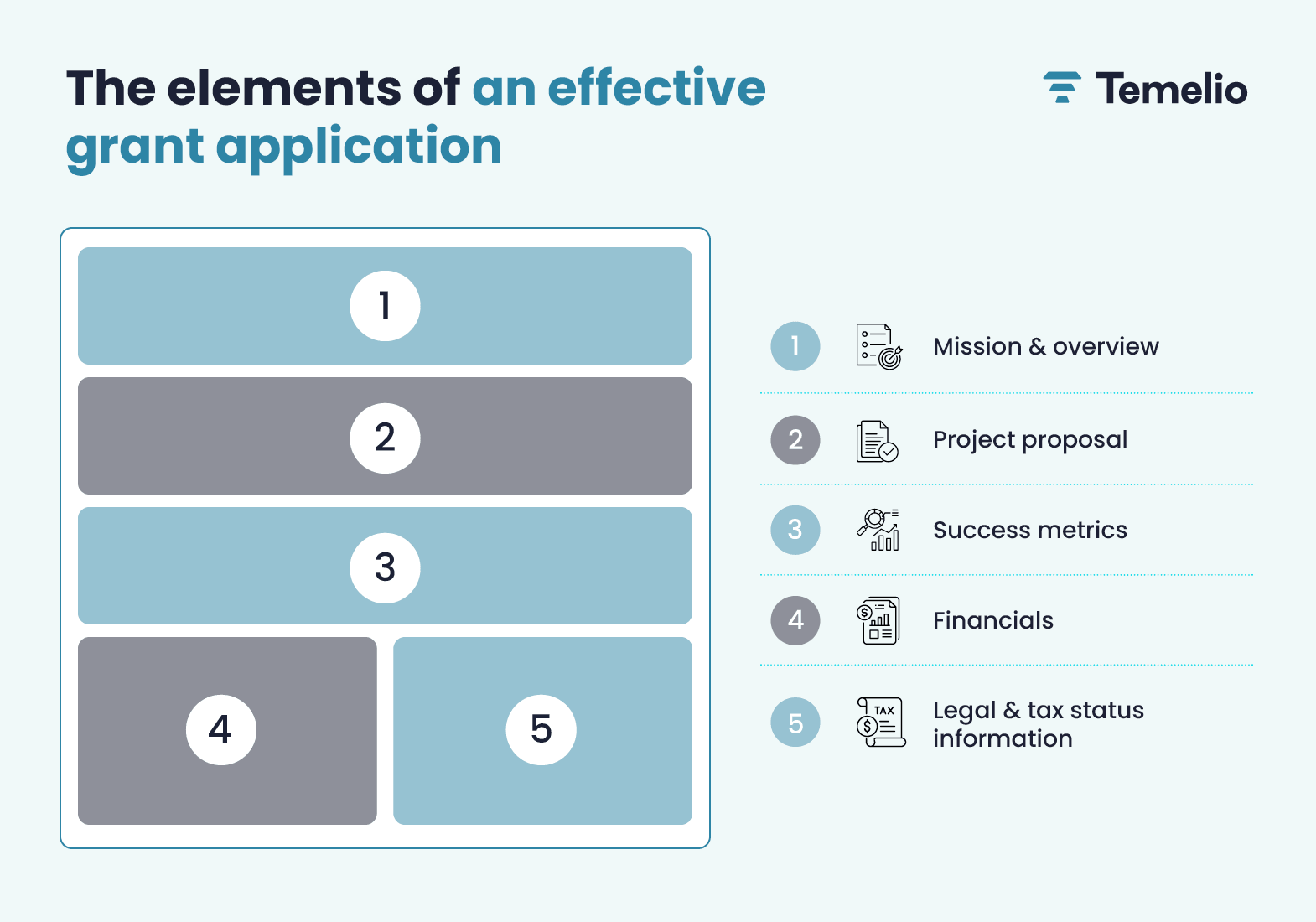
The purpose of a grant application is to get decision-makers (i.e., your foundation staff and board of directors) the information they need to make effective funding decisions. Anticipating what those individuals will need to know and in what format they will need it helps you design a form and grantmaking process that fits how your team works.
General information you will likely want to collect from every applicant includes:
Beyond those core elements, you might also ask questions related to your foundation’s values and priorities. This could include questions about your applicants’ commitment to diversity and inclusion, the demographic composition of the community a nonprofit serves, or the qualities the organization considers essential for leadership, such as professional and lived experience, collaboration, and community involvement.
Your application can even go beyond written responses. Consider including opportunities to bring their work to life by including a place in your application to upload a video or share a case study.
Not every organization will need to answer every component of the application in the same depth. You may choose to include tiered requirements based on the size of the request or the type of applicant (new vs. returning, general operating support vs. project-specific funding, etc.), so smaller asks require a lighter application. Mapping each component to a specific decision you will need to make is the easiest way to solicit the right amount of information from each applicant and give your team time to carefully read each submission.
Every grantmaker’s priorities are different, but there are some questions that will appear on almost every application. For a closer look at where to begin with your application, your team can review example questions or a grant application template. The samples below contain boilerplate language for questions that come up often in grant applications. Refine each one to reflect what information you hope to gain from it.
This is by no means an exhaustive list. Draw from the categories and wording that relate to what your team will need to make a decision, leave out those that aren’t relevant to your process, and draft any other questions that will be important in your review. The best grant application for your organization will be different from any other grantmaker’s.
Being a responsible grantmaker means balancing your foundation’s needs with respect for the time burden placed on applicants. The #FixTheForm Report found that nonprofits lose 20-30% of their time to application inefficiencies each year. Your foundation can respect applicants’ time with a clear, concise form and process.
Here is where you should focus:
Publishing detailed guidelines, such as funding priorities, geographic focus, typical grant size, and restrictions, on your organization’s website can help you filter submissions before the application period even begins. It saves time for both interested nonprofits and your team, since poorly aligned organizations can opt out before investing hours in a proposal, giving your decision-makers have fewer submissions to review.
For returning grantees, import basic information like the organization’s mission and overview into the application for renewed funding, so they don’t have to re-enter it. Select a grants intelligence system like Temelio that auto-populates this from past applications and information stored in your foundation’s CRM.
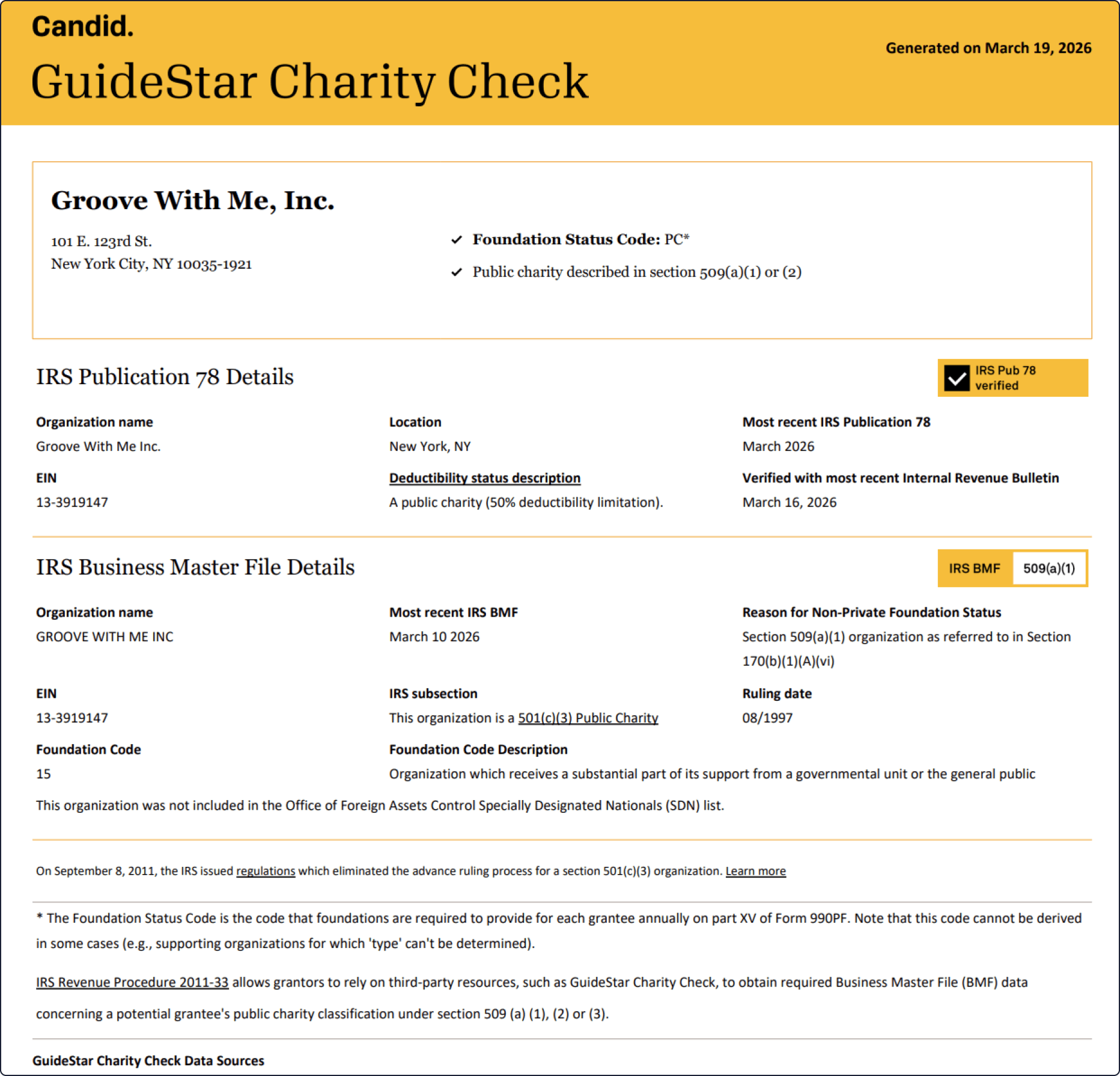
Certain items, such as a nonprofit’s recent Form 990 and tax-exempt status, can be pulled straight into your grant management software. For example, Temelio offers an integration with Candid to automate due diligence.
Phrase your application questions as directly and simply as possible, and consider how much detail will be useful to your review process. Land on a word or character count that keeps your team from spending hours on each application, but doesn’t make applicants spend too much time editing their answers down either.
If you’re awarding grants in communities where English isn’t the predominant language, consider translating your application into the dominant language. If your organization does not have bilingual team members, you can do this through a grants management platform like Temelio.
If your foundation collects fairly standard information, think about letting applicants upload an application they’ve already developed for another grantmaker, rather than requiring them to re-answer every question from scratch to fit your formatting requirements.
A longer application may be difficult to complete in one sitting. Let applicants save their progress and return later to help them collect their thoughts and avoid abandoning their applications.
Grants intelligence software can take over the manual parts of your application process, enabling you to auto-populate returning applicants’ information, keep records and correspondence in one place, translate applications, and automate deadline reminders and reviewer workflows. The right solution can help your team spend less time on manual tasks and more time reviewing applications.
Temelio’s grantee portal gives applicants a single place to submit, update, and track their materials, while giving your foundation a CRM that keeps every grantee’s relationship and applications in one platform. The system’s reporting and accounting tools tie grant data into your financials, so that approving an application can generate a payment schedule and sync with tools like QuickBooks, BILL, and Sage Intacct. That way, the information you collect in your application feeds into the rest of your grantmaking process instead of sitting in a form.
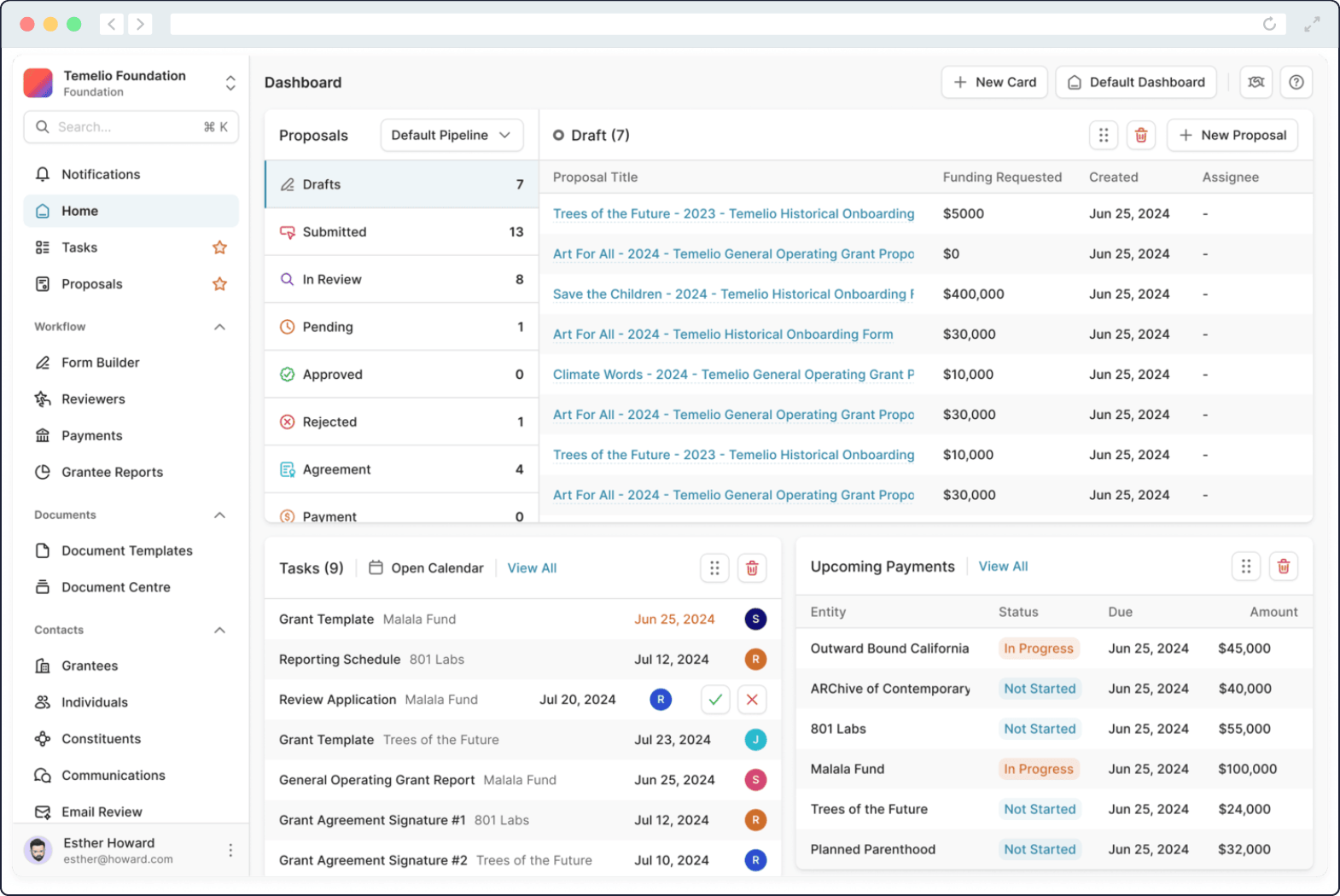
Our intuitive grants management software helps you improve your application process and continue building on it. By storing every application in one place, your team won't have to hunt for data when it's time for renewals, audits, or next season's reports.
To build a successful grant application, begin by asking yourself what you need to know to confidently support an organization. What are the legal requirements your due diligence questions need to capture, and what questions will tell you whether an application aligns with your foundation’s mission, values, and priorities?
The best applications address both of these considerations and are comprehensive enough to support your decision-making process, while remaining light enough that applicants can finish them without giving up valuable mission hours.
To help you refine your applications and improve your grantmaking workflows, explore these free resources:

Maya Kuppermann is the Co-Founder and CEO of Temelio, a modern grants management platform built for small and mid-sized foundations and philanthropic organizations. With experience spanning nonprofit leadership, family philanthropy, and technology, Maya brings a practitioner’s perspective to building software that simplifies and strengthens grantmaking. She has worked closely with over one hundred funders to modernize their operations and improve the grantee experience. Maya is passionate about leveraging technology to increase the effectiveness and accessibility of philanthropy.

Working with you globally from NYC
14 Wall St, 18C New York, NY 10005